
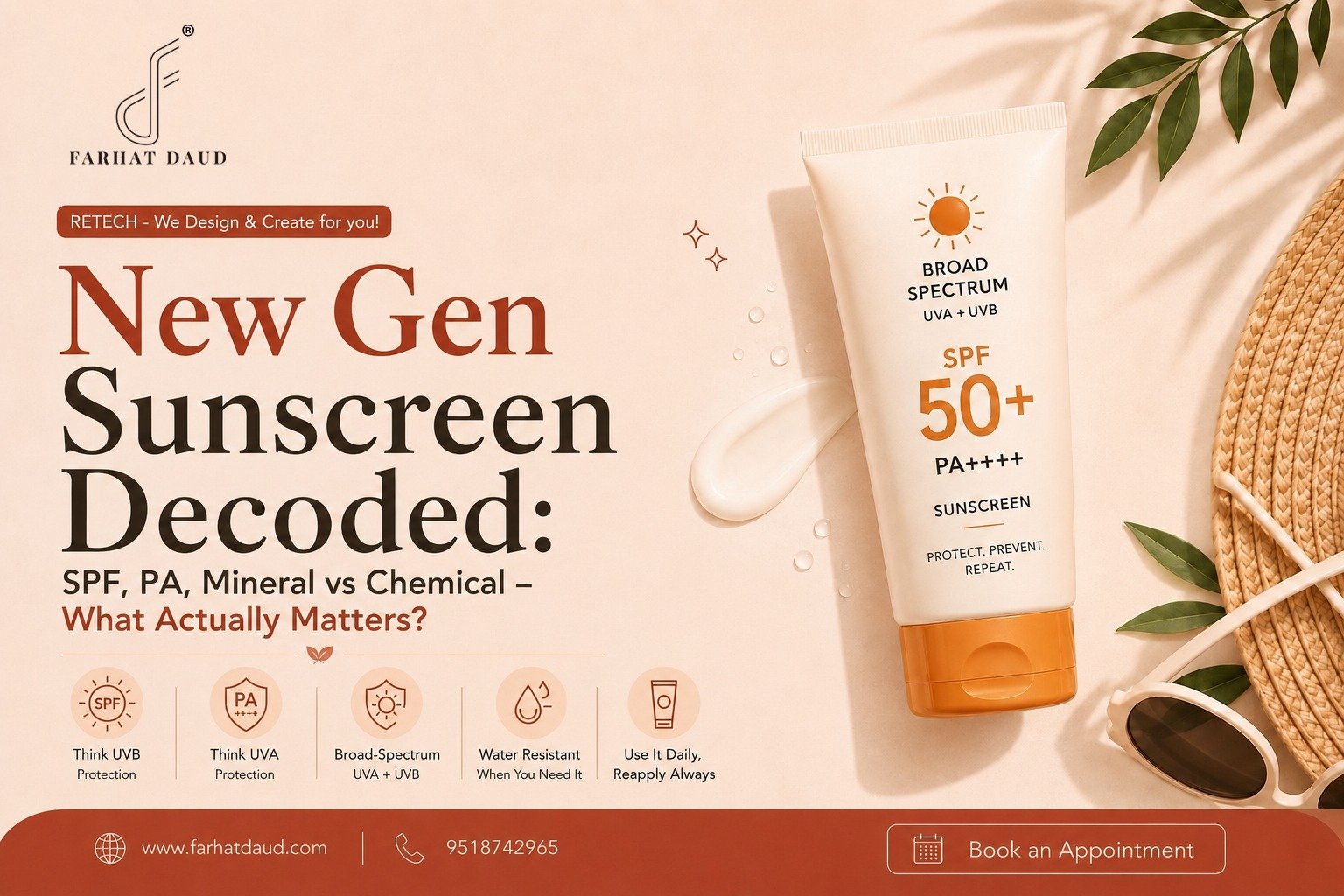
SPF 30 or 50? PA+++ or PA++++? Mineral or chemical?
Sunscreen labels can make a simple skincare decision unnecessarily confusing.
Here’s what actually matters.
SPF = UVB Protection
SPF (Sun Protection Factor) primarily measures protection against UVB rays, which are responsible for most sunburn.
* SPF 30: High protection
* SPF 50/50+: Very high protection
But SPF is not a time limit. SPF 50 doesn’t mean you can stay in the sun 50 times longer.
For everyday use, SPF 30 or higher is a good baseline, while SPF 50/50+ is often preferable for prolonged outdoor exposure or pigmentation concerns.
PA = UVA Protection
While SPF mainly tells you about UVB protection, PA and PPD indicate UVA protection.
You’ll typically see PA ratings:
PA+ → PA++ → PA+++ → PA++++
PPD = Persistent Pigment Darkening
PPD is a way of measuring UVA protection by observing persistent skin darkening after UVA exposure. A higher PPD (or UVA-PF) generally indicates stronger UVA protection.
Unlike SPF, which focuses mainly on UVB-related sunburn, PPD focuses on UVA-related pigmentation.
More ‘+’ generally means greater UVA protection.
And UVA matters — it contributes significantly to photoageing and pigmentation.
The simple rule:
Don’t look at SPF alone. Look for good UVA + UVB protection.
Mineral (Physical) vs Chemical Sunscreen
Mineral (Physical) Sunscreens
Usually contain filters such as zinc oxide or titanium dioxide.
Chemical Sunscreens
Use organic UV filters that absorb UV radiation.
So which is better?
Neither is universally better.
Both can provide effective sun protection. Mineral sunscreens may be preferable for some people with sensitive skin, while others may prefer the lighter texture and cosmetic elegance of a chemical or hybrid formula.
The best sunscreen is one you can comfortably use every day.
What Should You Actually Look For?
When choosing a sunscreen, forget the marketing overload and check for:
✓ SPF 30 or higher
✓ Broad-spectrum protection
✓ Good UVA protection
✓ Water resistance if you’re outdoors, swimming or sweating
✓ A texture you’ll actually enjoy wearing
Because applying enough sunscreen consistently matters more than choosing between “mineral” and “chemical” based on a trend.
What If You Have Pigmentation?
If pigmentation or melasma is a major concern, consider a tinted sunscreen containing iron oxides.
Tinted formulations can offer additional protection against visible light, which may contribute to pigmentation in susceptible individuals.
The Sunscreen Cheat Code
SPF → Think UVB
PA → Think UVA
PPD → Think UVA
Broad-spectrum → Think UVA + UVB
Mineral vs chemical → Think formulation & personal preference
And most importantly:
Apply enough. Reapply when needed. Use it consistently.
Because the best sunscreen isn’t necessarily the most expensive, most hyped or most complicated one.
It’s the one that protects your skin — and that you actually use.
