
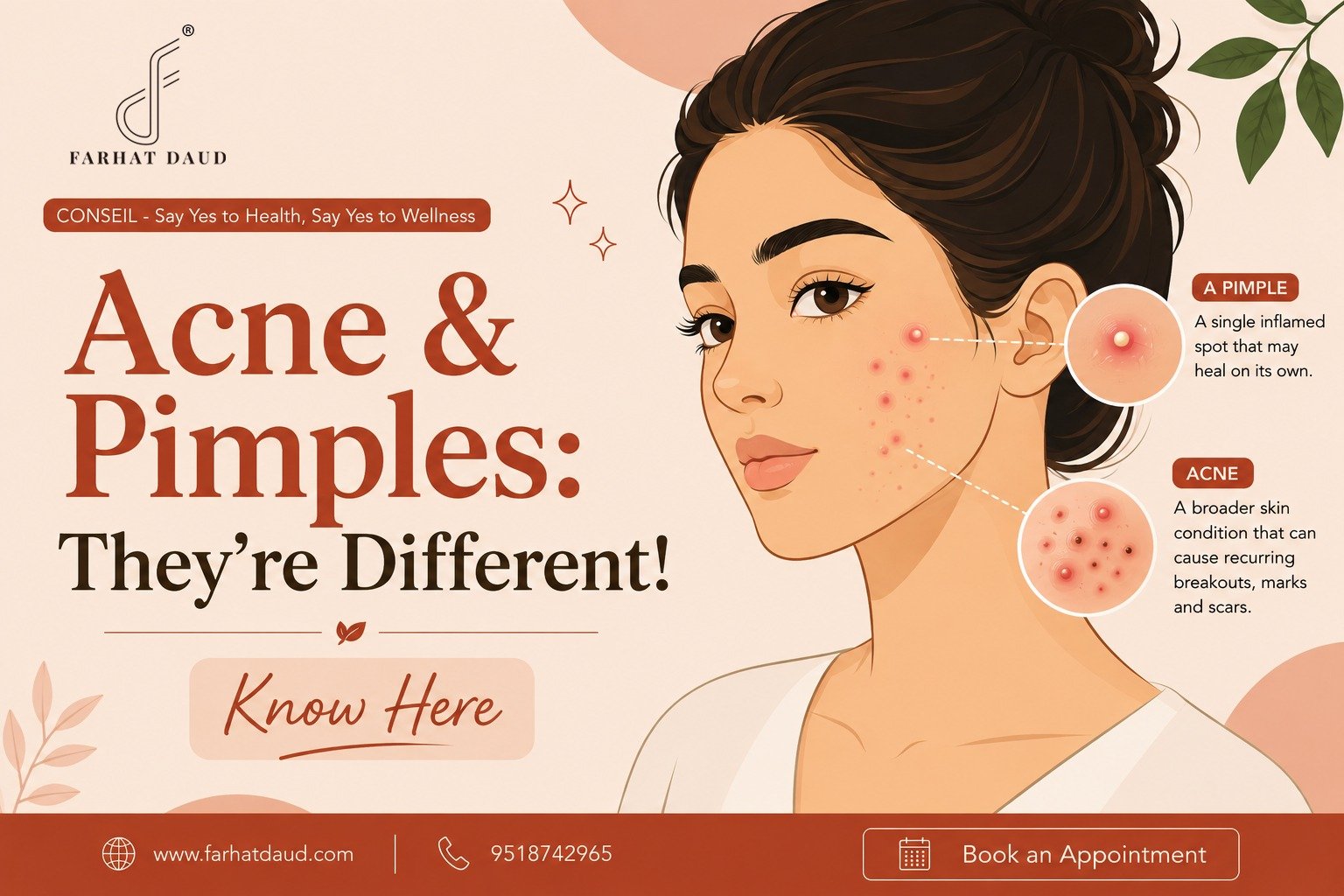
Think acne and pimples are the same thing? Not quite.
We often use the words interchangeably, but there’s an important difference. Understanding it can help you understand what your skin is actually going through — and why simply treating a pimple may not be enough.
So, What’s the Difference?
A pimple is a type of acne lesion.
Acne is the broader skin condition, while pimples are one of its visible manifestations.
Think of it this way:
All pimples can be part of acne, but acne isn’t just pimples.
Acne can include blackheads, whiteheads, papules, pustules, nodules and cysts, depending on its type and severity.
Why Does Acne Happen?
Acne usually develops when several factors come together:
Excess oil + dead skin cells + clogged pores + inflammation
Hormonal changes can increase oil production, which is why acne is particularly common during adolescence — but it can continue well into adulthood.
Genetics, certain medications, skincare or cosmetic products, stress and other factors can also influence acne.
A Pimple vs Acne
A Pimple
A single or occasional inflamed spot can happen to almost anyone.
It may appear after a blocked pore becomes inflamed and can settle on its own.
Acne
When breakouts are recurrent, widespread or persistent, you’re dealing with acne rather than simply “a few pimples.”
Acne can also leave behind:
- Dark spots
- Red marks
- Scars
And these can sometimes last much longer than the original breakout.
Should You Pop a Pimple?
Ideally, no.
Squeezing or picking can push inflammation deeper, delay healing and increase the risk of post-acne marks and scarring.
That satisfying “pop” can come with a much less satisfying mark that stays for weeks or months.
Does Acne Only Affect Teenagers?
Definitely not.
Adult acne is very real.
Hormonal fluctuations, stress, genetics and changes in skincare or lifestyle can contribute to acne even in adulthood.
And acne isn’t limited to the face either — it can affect the chest, back and shoulders.
When Is It Time to See a Dermatologist?
If your acne is:
- Persistent or repeatedly returning
- Painful or deep
- Leaving dark marks or scars
- Affecting your confidence
- Not improving despite your skincare routine
…it may be time to consult a dermatologist.
The earlier significant acne is appropriately managed, the better the chances of reducing long-term scarring and pigmentation.
The Bottom Line
A pimple is a spot. Acne is a condition.
So instead of treating every breakout as an isolated problem, pay attention to the bigger picture.
Recurring breakouts? Don’t just keep popping pimples.
Understand your acne, identify what’s triggering it, and choose treatment based on its type and severity.
Clearer skin starts with knowing what you’re actually treating.
